Showing posts with label tourism. Show all posts

Thursday, July 12, 2007

How to get in Cairo

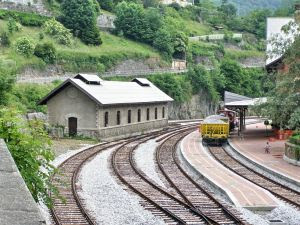
Cairo train station

Cairo is the capital of Egypt and, with a total population in excess of 16 million people, one of the largest cities in both Africa and the Middle East (which regions it conveniently straddles) - it is also the 13th largest city in the world. Situated on the River Nile, Cairo is famous for its own history - preserved in the fabulous medieval Islamic city and in Old Cairo - and for the ancient, Pharaonic history of the country it represents. No trip to Cairo would be complete, for example, without a visit to the Giza Pyramids, to nearby Saqqara, or to the Egyptian Museum in the center of town. Though firmly attached to the past, Cairo is also home to a vibrant modern society.
Cairo International Airport (IATA: CAI), is well served by Egyptair, the national carrier, and others such as British Airways, Air France, [KLM], Singapore Airlines and Lufthansa. Egypt Air now lands and departs from the domestic terminal, even for international flights.
Getting to downtown Cairo can be a pain. 40 LE is a good price by taxi, and refuse to pay the "ticket" (ie, airport toll) for the driver. For the adventurous, catch a public bus to Midan Tah Rir or Midan Ramses. Walk 5 minutes out of the terminal to the big undercover bus station, and ask a local, but don't catch the notorious green buses. Rides are just under 2 LE. It takes around 1 - 1.5 hours to reach downtown.
Cairo's main railway station - Ramses Station (Mahattat Ramses) - is located on Midan Ramses. Trains run to Cairo from most other regions and cities within Egypt.

Alexandria are served by a large number of departures throug the day. Among the best trains are the Espani which has a morning service from Cairo at 9am. The Espani and Turbobin are the best services, driving non-stop to Alexandria and taking 2 hours and 40 min. The next best service is al-fransawi, which stops at the major Delta cities on the road. Buy tickets one day in advance to be
Going to Upper Egypt, Luxor and Aswan, the Sleeping Trainleave Cairo 8 pm and arriving in Luxor 5.05 am and Aswan 8.15 am. Check the website for more departures, including one three days a week from Alexandria. It's relatively expensive at 60 USD for a bed in a double-person cabin one way. Tickets are bought at the office to your left as you enter the train station from the Metro and taxi station. The tickets are payable in US dollars only (there are no exchange offices at the train station itself).
Going to Upper Egypt, the alternative to the expensive sleeper (or flying) is the ordinary trains. One of these departs at 00.30 to Luxor and Aswan and is supposed to take 10 hours to Luxor and 13 hours to Aswan.
Trains also depart to the canal cities, but buses are much faster.
For those unfamiliar with Cairo traffic, one shouldn't expect to drive. The traffic is, at the least, overwhelming for the common traveler. Road signs, lanes, right-of-ways, etc. are not adhered to. The driving has a consistency, but not in any official way. Parking houses or official parking spots are rare, but many places people work to look after parked cars. A small tip is expected for this service.
Getting in and out of Cairo, the roads to and from Fayoum and the destert cities in the south-west and Alexandria, Delta and Marsa Matrouh in the north-west are through the Giza and pyramids area, the road to Beni Suueif and Upper Egypt (Aswan, Luxor) is in the south, after Maadi and Helwan. North from Heliopolis are the road to the canal cities (Port Said, Ismailiyya, Suez) and Sinai. Ein al-Sukhn and Hurghada is best reached by the tolled road after New Cairo City.
Buses arrive to Cairo from virtually all over the country. The two main destinations are Midan Ramsis and Turgoman, but vechiles also sometimes stop at other destinations, notably abbasiya. From Midan Ramses and Turgoman it's a quick 5 EP taxi cab ride to downtown, 7-10 EP to Zamalek.
The Turgoman has, from 2007, been renovated into a new, modern indoor station, close to the older one
From Turgoman, hourly services run to the canal cities (2 hrs) and Sharm al-Sheikh. To Sharm, the East Delta is taking approximately 8 hrs. The Superjet is faster, driving non-stop without a break in approximately 6 hrs. Three of the East Delta services continue to Dahab. Fares for the East Delta is approximately 80 EP for foreigners.
Services also go to Taba and Nuweiba, leaving three times daily (including one night services) with prices comparable with the services to Sharm. It takes 6 hrs all the way to Nuweiba.
To the canal cities, Port Said, Ismailiya and Suez, buses go all the time from Turgoman station, costing 20-30 EP. The travel to all destinations takes a little bit more than two hours.
Uncomfortable, but cheap, microbuses leave from Cairo to a large number of destinations. The main garages are Midan Ramsis and al-Marg metro station (for the north-east and Sinai). They are faster and might as such be an option for shorter trips, but have a terrible toll of acccidents. There are also other places these buses leave from depending on your destination, ask locals. Be aware that at least for Sinai, foreigners are prohibted to use the microbus system.

Wednesday, June 13, 2007

International tourism

Increasing speed on railways meant that the tourist industry could develop internationally. To this may be added the development of sea travel. By 1901, the number of people crossing the English Channel from England to France or Belgium had passed 0.5 million per year. Shipping companies were anxious to fill cabin space that was under utilised.

For example, P&O found that the majority of their passengers for India and the Far East joined the ship at Marseilles. Consequently, they marketed holidays based upon sea trips from London to Lisbon and Gibraltar. Other companies diverted their older ships to operate cruises in the summer months.

However, the real age of international mass travel began with the growth of air travel after World War Two. In the immediate post-war period, there was a surplus of transport aircraft, such as the popular and reliable Douglas Dakota, and a number of ex military pilots ready to fly them. They were available for charter flights, and tour operators began to use them for European destinations, such as Paris and Ostend.

International tourism

Vladimir Raitz pioneered modern package tourism when on 20 May 1950 his recently founded company, Horizon, provided arrangements for a two-week holiday in Corsica. For an all inclusive price of £32.10s.-, holiday makers could sleep under canvas, sample local wines and eat a meal containing meat twice a day - this was especially attractive due to the continuing austerity measures in post-war United Kingdom. Within ten years, his company had started mass tourism to Palma (1952), Lourdes (1953), Costa Brava (1954), Sardinia (1954), Minorca (1955), Porto (1956), Costa Blanca (1957) and Costa del Sol (1959).

These developments coincided with a significant increase in the standard of living in Britain. Further, the contribution of affordable air travel in combination with the package tour enabled international mass tourism to develop. The postwar introduction of an international system of airline regulation was another important factor. The bilateral agreements at the heart of the system fixed seat prices, and airlines could not fill blocks of empty seats on underused flights by discounting. But if they were purchased by a tour operator and hidden within the price of an inclusive holiday package, it would be difficult to prove that discounting had taken place - even though it was obvious that it had!

Another significant development also happened at the end of this decade. The devaluation of the Spanish peseta made Spain appear a particularly attractive destination. The cheapness of the cost of living attracted increasing numbers of visitors. Mass package tourism has at times been an exploitative process, in which tour operators in a country with a high standard of living make use of development opportunities and low operating costs in a country with a lower standard of living. However, as witness the development of many tourist areas in previously poor parts of the world, and the concomitant rise in standards of living, when there is equality of bargaining power, both parties can gain economic benefits from this arrangement.

Spain and the Balearic Islands became major tourist destinations, and development probably peaked in the 1980s. At the same time, British tour operators developed the Algarve in Portugal. The continuing search for new, cheaper, destinations spread mass tourism to the Greek Islands, Italy, Tunisia, Morocco, Turkey, and more recently Croatia.

For someone living in greater London, Venice today is almost as accessible as Brighton was 100 years ago. Consequently, the British seaside resort experienced a marked decline from the 1970s onwards. Some, such as New Brighton, Merseyside have disappeared. Others have reinvented themselves, and now cater to daytrippers, the weekend break market or business conferences.

Monday, June 11, 2007

Backpacking - traveling

bag traveling

Backpacking is a term used to denote a form of low-cost independent international travel, differentiating it from other forms of tourism notably by the following typical attributes: minimal budget use, longer duration traveling, use of public transport and multiple destinations/countries. The origin of the name comes from the backpacks that budget travelers generally carry in the interests of mobility and flexibility.

Many commentators see backpacking as descriptive, not only of low-cost travel, but of the culture and philosophy often associated with it especially anti or trans-nationalism as well as a romanticization of wanderlust and a desire for "authentic" contact with local culture.

Low-cost options are popular: such as sharing lifts, budget flights, rail/bus passes (or if the backpacking trip is circumglobal, a relatively cheap round-the-world air ticket which permits numerous stops), youth hostels, free hospitality services and buying food at supermarkets and sometimes cooking for oneself in kitchen equipped hostels abroad instead of going to restaurants.

Hostels and other budget accommodations in the 'developed' world tend to be communal to some degree, and thus backpacker culture is often highly social and emphasizes the camaraderie of communal life, such as the lounge area common in many hostels. When backpackers stay in one place for a while, they often seek a house-share with numerous other backpackers and are likely to share a room to keep the costs down.

The common language of backpackers is overwhelmingly English in varying levels of fluency. This is due to the fact that English is the first language of most from Commonwealth of Nations countries plus USA and Ireland. Another major reason for the popularity of English is that it is the most common second language of most Western Europeans.

Backpacker culture is perhaps typified by the Lonely Planet (Australian) series of guidebooks, which caters to budget travelers both in its regular guides as well as, more specifically, the "On a Shoestring" regional compilations. The Rough Guide (UK) and Let's Go (USA) series of guidebooks are also popular. In France, the traditional backpacker's guidebook is the Guide du routard.

Traditionally, backpackers do not travel with expensive electronic equipment such as laptop computers and PDAs due to concerns about theft, damage, and additional luggage weight. However, the desire to stay connected coupled with trends in lightweight electronics have given rise to the flashpacking trend.

The majority of backpackers are in their late teens and 20s. Patrons at most youth hostels are over 18 (some even mandate a minimum age of 18) while guests over 30 are more rare. The 'stereotypical' backpacker is often envisioned as a college student or recent graduate in their mid-twenties with no dependents (spouse, children), or permanent employment at home, therefore making it easier to put typical daily responsibilities on temporary hiatus to go traveling for months at a time. Depending on the part of the world, the median age of backpackers can vary. Australia, Europe, and North America generally appeal to more youthful travelers, while more 'difficult' regions such as South America or the Middle East attract older and more experienced travelers.

reilroad traveling

Backpacker philosophy is sometimes criticized for being hypocritical. Some travelers have been known to forego finding "authentic" contact with a culture, and instead congregate only with other travelers in international hostels or guesthouses. Backpackers are accused of traveling to exotic places only to associate with other backpackers. Generally backpackers are from developed countries, speak very good or fluent English (even if from a non-English speaking country). When these backpackers arrive in developing countries they congregate at the hostels, guesthouses, bars in the center of town where they tend to not blend in.

Backpackers are sometimes blamed for the commercialization of the destinations they travel to. This can often lead to the overuse of certain natural and cultural resources or commercial exploitation of local people or the economy, a vice backpacking shares with other forms of tourism. A notable example of this phenomenon is Byron Bay in Australia, which was a largely quiet backpacker town in the 1970s and is now considered one of the most popular destinations in the 2000s with a bias for yuppies. This is sometimes said to actually pervert the backpacking culture itself: while backpackers seek genuineness and "authentic" cultural interactions, thus often looking for places with as few other foreigners as possible, they very often tend to meet in so-called "backpacker paradises" - places where all backpackers meet and that, eventually, end-up being modern-day "hippie-resorts". Examples include San Pedro de Atacama, a formerly isolated village in Chile and now a town dependent on tourism, and the island of Ko Pha Ngan in Thailand. This phenomenon is perhaps not unlike the phenomenon of gentrification that happens in urban ecologies.

A third layer of criticism is economic. Backpackers’ pursuit of “cheap” travel destinations is only possible through the imbalance of living costs between Western and developing nations. Thus, backpacking can be seen as an inherently exploitative activity that benefits from the poverty of destination countries. South East Asia and much of Latin America are notable examples of very inexpensive countries which backpackers visit and have the ability to stay comfortably for months even on a relatively small budget. A more recent example includes the collapse of the peso currency in Argentina in the early 2000s, which quickly made that country a very attractive destination for budget backpackers.

An additional criticism is a perception of language arrogance by many backpackers, particularly those from largely monolingual English-speaking countries such as Australia or the USA. While having a common language is a defining feature of backpacking, monolingual backpackers (who overwhelmingly speak English) are sometimes accused of being too arrogant with their use of English while abroad. A common citation is the assumption that youthful people and those working in the tourism industry in many countries around the world are now proficient in English or that English-speaking help will not be difficult to find, as opposed to learning and speaking the local language at even just a basic level out of self-interest or respect.

Finally, one more layer of criticism is the impact a heavy flow of backpackers can have on local cultures, especially in developping countries. The presence of large numbers of people who do not respect local customs can have effects that range from being a mild irritant to locals to being damageable to the local culture's long-term integrity. For example, a significant number of backpackers take their cues from each other and engage in behaviours that are not acceptable to their host country (such as dressing inappropriately, sunbathing topless or engaging in public displays of affection), despite the multiple warnings in guidebooks. Besides creating animosity against backpackers, this has led to some backpacking beach communities to become local attractions for young local men (such as many beaches in India). Also damaging is the heavy use of drugs, alcohol and tobacco made by some backpackers. For many, these habits are not representative of their habits at home. However, youth in the host country are constantly exposed to young, wealthy and arguably fashionable backpackers displaying these behaviours.[neutrality disputed] This can lead to heavy pressures to adopt similar behaviours.