Monday, November 21, 2011
Palic
Palic, 8km E of Subotica, 170 km north of Belgrade.
Lake Palic became a fashionable summer resort more than 150 years ago. Proof of this is visible in its Art Deco architecture (the Zenski Strand building ). The Great Park was built in 1842 to resamble an English garden . Located in it are a water tower , the Great Terrace (Velika Terasa),Summer Stage (Letnja pozornica), concert pavilion, and a zoo , set in a beautiful botanical garden .
The lake s well-tended beaches and great climate ( 2,100 sunny hours a year) make it a good place to relax or try out some water sports : the lake is shaped like is an ellipse and is one of the best suited for water sports in Europe. The shore is 17 km in length. The average depth of the water is about 2 meters and there is an abundance of aquatic life , especially myriad fish . There is also an adjacent area for basketball and other sports . The lake contains some sulfur and somewhat alkaline in addition to containing natural chlorides.
Saturday, November 19, 2011
Fruska Gora
The mountain (539m) and much of its surroundings are a national park . It was once an island in the Pannonian Sea that used to cover the Pannonian Plain long before the time of man. The mountain is covered by a thick forest of hundred year oak and birch trees , as well as the linden, a tree beloved by the Slavic peoples.
Monasteries of Mt. Fruska Gora
The mountain has been central to Serb spirituality for centuries . The monasteries were built in the late Middle Ages when Serb culture was moving northward in response to the Ottoman onslaught.
Petkovica
Krusedol
Friday, November 18, 2011
Lepenski vir
Lepenski vir , site situated on the banks of the Danube at Djerdap 46 km from Golubac in Serbia. It dates from 6700 - 4500 BC . The location itself is magnificent and is one of the most important archeological sites in the world .
Lepenski vir consists of several layers of remains of settelmaents of fishermen and hunters and a regional holy site . It is famous for its fish- shaped figures carved from flat stones taken out of the Danube , which are the oldest known examples of sculpture in Europe . The foundations of the settelments are specific - shaped like an arc of a circle with the tip cut of , indicating to an outstanding knowledge of mathematics. Tools found at the site were fashioned with unusual mastery and pieces of elaborate jewlery have also been discovered . The Culture of Lepenski vir comprises a series of prehistoric settelments along the Danube, built mostly near large whirpools rich in fish . Original sculptures are perserved in the National Museum in Belgrade.
Thursday, November 17, 2011
Vinca
Village on the right bank of the Danube , 11km from Belgrade . Vinca is one of the major prehistoric archeological sites in Europe. The settelments were found beneath an old Serb necropolis ( 10th to 13th century ), a 10 m cross- section graphically showing all the layers.
As an economic and cultural center , Vinca has lent its name to what is known as the Vincian culture. This well developed Neolithic culture, which thrived from 4500 - 3200 BC , encompassed the central Balkans and a part of the Pannonian Plain and was without match in Europe in terms of the territory it coverd , the size of its settelments , and its artistic attainments. Its anthropomorphic and zoomorphic terra-cottas testefy to a highly- developed religion . Also found here were high- quality pieces of pottery , tools , and jewlery made from shelles ,as well as evidence of primitive foundries. Some researchers belive the signs preserved on Vincian pottery actually represent the oldest example of writing .
Thursday, April 14, 2011
Travel photos
Great art photos from traveling all over the world.
o DUBA PLAINS (Botswana)
o ETOSHA (namibia)
o GREAT WHITES (Capetown)
o Sand Dunes (Namibia)
o Cormorant Fishing (Japan)
o Floating Markets (Bangkok)
o DUBA PLAINS (Botswana)
o ETOSHA (namibia)
o GREAT WHITES (Capetown)
o Sand Dunes (Namibia)
o Cormorant Fishing (Japan)
o Floating Markets (Bangkok)
Monday, November 15, 2010
Montenegro Real estate
Here are some beautiful real estate in Montenegro photos. Some are available and some are just great examples you can see in Montenegro coast. Real estates are in Budva, Herceg Novi, Bar, Kotor, Tivat, Ulcinj and many others. Montenegro is divided into twentyone municipalities and this places, buildings and flats are almost from all of them.
Friday, May 14, 2010
Lake Powell
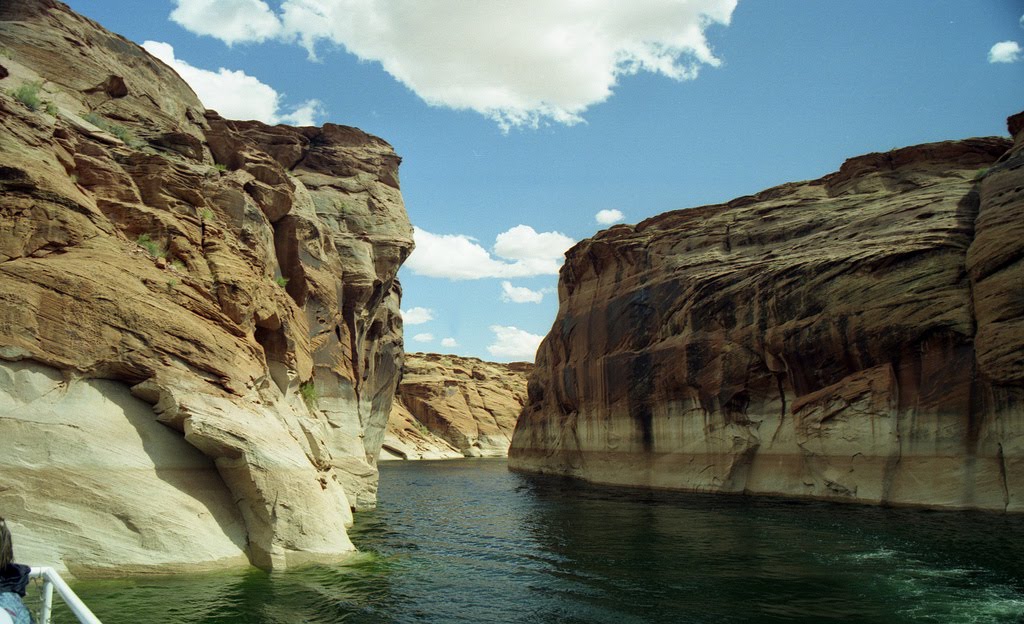
Lake Powell is a reservoir on the Colorado River, straddling the border between Utah and Arizona. It is the second largest man-made reservoir in the United States behind Lake Mead. Lake Powell was created by the flooding of Glen Canyon by the controversial Glen Canyon Dam, which also led to the creation of Glen Canyon National Recreation Area, a popular summer destination. The reservoir is named for explorer John Wesley Powell, a one-armed American Civil War veteran who explored the river via three wooden boats in 1869. In 1972, Glen Canyon National Recreation Area was established. It is public land managed by the National Park Service, and available to the public for recreational purposes. It lies in parts of Garfield, Kane, and San Juan counties in southern Utah, and Coconino County in northern Arizona.

by Wolfgang Staudt

by wordmunger

by Geert Orye

by exfordy

by Alex E. Proimos

by Wolfgang Staudt

by wordmunger

by Geert Orye

by exfordy

by Alex E. Proimos
Tuesday, November 25, 2008
Laponian area - Sweedish
The Laponian area is a large mountainous wildlife area in the Lapland province in northern Sweden, more precisely in the Gällivare Municipality, Arjeplog Municipality and Jokkmokk Municipality. It was made a UNESCO World Heritage Site in 1996.
The total area is about 9400 km², making it the world's largest unmodified nature area which is cultured by natives - the natives in this case being the reindeer herding Sami people. Being so large, the geography of the area varies greatly. Each nature reserve and national park has its distinctive features.
95% of the area is protected as national parks or nature reserves. It consists of the national parks Muddus, Sarek, Padjelanta and Stora Sjofallet, and the nature reserves Sjaunja and Stubba. The other 5% are in the areas of Sulitelma, Tjuoltadalen, and Rapadalen. The village Porjus is a natural port to the Laponian area and has recently opened an information center.
The highest mountain of the area is Sarektjahkka, at 2,089 meters.
The total area is about 9400 km², making it the world's largest unmodified nature area which is cultured by natives - the natives in this case being the reindeer herding Sami people. Being so large, the geography of the area varies greatly. Each nature reserve and national park has its distinctive features.
95% of the area is protected as national parks or nature reserves. It consists of the national parks Muddus, Sarek, Padjelanta and Stora Sjofallet, and the nature reserves Sjaunja and Stubba. The other 5% are in the areas of Sulitelma, Tjuoltadalen, and Rapadalen. The village Porjus is a natural port to the Laponian area and has recently opened an information center.
The highest mountain of the area is Sarektjahkka, at 2,089 meters.
Tuesday, October 7, 2008
Dubrovnik Croatia
Dubrovnik is an old city on the Adriatic Sea coast in the extreme south of Croatia. It is one of the most prominent tourist resorts of the Mediterranean, a seaport and the center of the Dubrovnik-Neretva county. Its population was 43,770 in 2001. Dubrovnik is nicknamed "Pearl of the Adriatic" and is listed as a UNESCO World Heritage Site.
The city of Dubrovnik/Ragusa was built on maritime trade. In the Middle Ages it became the only city-state in the Adriatic to rival Venice. Supported by its wealth and skilled diplomacy, the city achieved a remarkable level of development during the 15th and 16th centuries. Furthermore, Dubrovnik was one of the centers of the development of the Croatian language and literature, home to many notable poets, playwrights, painters, mathematicians, physicists and other scholars.
Today Dubrovnik is the proudest feather in Croatia's tourist cap, an elite destination and one of the most beautiful towns in the Mediterranean, definitely a place to visit. Dubrovnik used to be an independent republic, surviving mostly on trade. It managed to survive many centuries, with constant threats to its territory, particularly from the mighty Ottoman Empire and Venice. As early as 19th century, it was discovered by celebrities, to get its well-deserved title of elite destination in the 20th century. The fact that nine out of Croatia's fifteen most luxurious hotels are situated in Dubrovnik shows how important it is to be seen in Dubrovnik. It was thus visited by numerous kings, queens, princes and princesses, presidents, high diplomats, celebrities and businessmen, including, of course, the late Pope John Paul II, who was also an honorary citizen of the city of Dubrovnik.
The city of Dubrovnik/Ragusa was built on maritime trade. In the Middle Ages it became the only city-state in the Adriatic to rival Venice. Supported by its wealth and skilled diplomacy, the city achieved a remarkable level of development during the 15th and 16th centuries. Furthermore, Dubrovnik was one of the centers of the development of the Croatian language and literature, home to many notable poets, playwrights, painters, mathematicians, physicists and other scholars.
Today Dubrovnik is the proudest feather in Croatia's tourist cap, an elite destination and one of the most beautiful towns in the Mediterranean, definitely a place to visit. Dubrovnik used to be an independent republic, surviving mostly on trade. It managed to survive many centuries, with constant threats to its territory, particularly from the mighty Ottoman Empire and Venice. As early as 19th century, it was discovered by celebrities, to get its well-deserved title of elite destination in the 20th century. The fact that nine out of Croatia's fifteen most luxurious hotels are situated in Dubrovnik shows how important it is to be seen in Dubrovnik. It was thus visited by numerous kings, queens, princes and princesses, presidents, high diplomats, celebrities and businessmen, including, of course, the late Pope John Paul II, who was also an honorary citizen of the city of Dubrovnik.
Saturday, October 4, 2008
Zlatibor mountine - Serbia

Zlatibor (meaning "Golden Pine") is a very popular mountain resort area in south-western Serbia. It is bounded on the north by Mount Tara, to the east by the Veliki Rzav River, to the south by the Uvac River and to the west by Bosnia and Herzegovina.
Warm and pleasant summers and not so cold winters. Zlatibor's air is very clean and healthy and going to Zlatibor is recommended for those who have tyroide gland-related and breathing issues.
Medium hills and a lot of fields. Highest peak is Tornik at 1496 meters (4908 feet), and other peaks are Brijac, Cigota, Vijogor, Konjoder, Liska, Gruda... Branesko polje (the Branesci Plain) is the biggest Zlatibor's plain.
Zlatibor has a lot of very pure and clean water. There are many smaller and bigger rivers, but there are no natural lakes. There are only a couple of artefact lakes. Zlatibor's waters have good infuence on human health because they contain some minerals.
Many animals inhabit Zlatibor's woods and pastures. More than 120 plant species can be found in Zlatibor's fields.
The first inhabitants of Zlatibor were the Illyrians. They left their small tombs all over Zlatibor. Romans conquered Zlatibor in 4th century BC and the Illyrians were romanized.
Slavs came in 7th century from what is today Poland.
From 1463 to 1804, Zlatibor was a part of the Ottoman Empire.
Beginning of tourism in Zlatibor dates from August 1893, when Aleksandar I Obrenović, king of Serbia, came to Kulaševac, as Kraljeve Vode were called back then. However, the real tourism started in 1905, when the king Petar I Karađorđević visited Kraljeve Vode.
In formal situations, Zlatiborians use the literary Serbian language. In unformal situations, however, languages that are used are the Traditional Zlatiborian, and the Neo-Zlatiborian.
The Traditional Zlatiborian is a dialect of the Serbian language. It is quite similar to the standard Serbian, but there are many differences. Knowing standard Serbian could be useful if you speak with a Zlatiborian villager, but not always. The Neo-Zlatiborian is a mixture of the Traditional Zlatiborian and the literary Serbian language.
English is not spoken in Zlatibor's rural areas, but in urban areas (in Kraljeve Vode and Cajetina) many people just know some words of it, or speak it well. However, entering a hotel or a restaurant where English isn't spoken could be quite possible.
When you come to Zlatibor, you will probably come to Kraljeve Vode. Kraljeve Vode is a small town, but it's very modern and urban (even more than Cajetina, the administrative centre of Zlatibor). It is connected with other Zlatibor's towns and villages. When speaking about Zlatibor, many people usually refer to Kraljeve Vode only.
The best way to get to Zlatibor is to get to Belgrade, the capital of Serbia, and then to look for a direct bus line to Zlatibor. Bus lines connect Zlatibor with all parts of Serbia, and Montenegro.
You can also come to Zlatibor by train from Belgrade and other bigger cities, but you'll end up in Semegnjevo, Susica, Sljivovica, or Jablanica, Zlatibor's villages. The main train station for Zlatibor, despite being called the Zlatibor Train Station (Zeleznicka stanica Zlatibor) is located in the village of Semegnjevo, 10 km away from Kraljeve Vode. Coming to Kraljeve Vode from there could be difficult, because there aren't a lot of people who speak English, so it would be better to leave the train in the neighboring city of Uzice, and then use a bus to come to Zlatibor.
Wednesday, June 11, 2008
Lake Ohrid
Ohrid is a large town in southern Republic of Macedonia on the shore of Lake Ohrid. A town of vast history and heritage, it was made a UNESCO heritage site in 1980. Ohrid is without a doubt the jewel in Macedonia's crown. Nestled between high mountains up to 2.800m and Lake Ohrid, it is not only a place of historic magnificence but also of outstanding natural beauty.
Archaeological finds indicate that Ohrid is one of the oldest human settlements in all of Europe. The lake itself is over three million years old. Ohrid town is first mentioned in Greek documents from 353 B.C.E., when it was known as Lychnidos - or, “the city of light.” Only much later, in 879 C.E., was it renamed Ohrid. The name probably derives from the phrase “Vo Hrid” – meaning roughly, “on the hill.” The town as we know it today was built mostly between the 7th and 19th centuries. During the Byzantine period, Ohrid became a significant cultural and economic center, serving as an episcopal center of the Orthodox Church and as the site of the first Slavic university run by St. Kliment and St. Naum at the end of the 9th century. At the beginning of the 11th century, Ohrid briefly became the capital of the great Samuil empire, whose fortress still presides over the city today.
Aside of the lake, Ohrid is most famous for its ancient churches, basilicas, and monasteries where Saints Kliment and Naum with the help of king Boris I (students of Cyril and Methodus) wrote their teachings and formulated the Cyrillic alphabet used in Bulgaria, Republic of Macedonia Russia, Serbia and Montenegro and many of the countries of the former Soviet Union. Most of these churches charge an entry which for tourists is normally double that what locals pay, but is still worth it. It is a good idea to cover up when entering a church, but most locals will understand the inconveniences involved during a hot Macedonian Summer. There is also a wonderful ancient walled fortress at the top of the city.
* Ohrid Summer Festival - The Ohrid Summer Festival is one of the largest and most important music and drama festivals in Macedonia. The first concert took place in 1961 in the church of St. Sophia, with its exceptional acoustics. The festival in Ohrid has a particular international flavour because of the participation of a large number of leading musicians and ensembles from the best known European and world music centers. There have been participants from 44 countries. This Festival has a solid reputation as it has gradually become part of the large family of the most famous European music festival. The Ohrid Summer Festival has its own sound conceptions, and it is able to draw up a musical program that includes artists of world renown. The Ohrid Summer Festival is held each year from July 12 to August 20.
The east coast is the most beautiful part of Ohrid Lake. It is part of Galičica National Park and it is protected by UNESCO along with the lake for its natural values. The first part of the east coast is less interesting, the road goes along the lake and is lined with hotels, tourist settlements and organized beaches.
* Ohrid Swimming Marathon - Each year, in the second half of July, the swimming elite throughout the world gathers in Ohrid and, starting from the monastery St. Naum, they swim along the Lakeshore to the town harbour, approximately a 30-km route. Since 1998 the Ohrid Swimming Marathon has entered in the World Swimming Club of the 12 worldwide held marathons under the patronage of FINA-The World Swimming Association.
* The Balkan Folklore Festival - Member of the UNESCO Association of The International Council of Organizations of Folklore Festivals and Folklore Art, and The International Organization for Folklore Art. This festival has so far presented numerous original songs and dances from folk culture for more than 30 years. About 1,200 ensembles with 42,000 members have taken part in the festival.
Archaeological finds indicate that Ohrid is one of the oldest human settlements in all of Europe. The lake itself is over three million years old. Ohrid town is first mentioned in Greek documents from 353 B.C.E., when it was known as Lychnidos - or, “the city of light.” Only much later, in 879 C.E., was it renamed Ohrid. The name probably derives from the phrase “Vo Hrid” – meaning roughly, “on the hill.” The town as we know it today was built mostly between the 7th and 19th centuries. During the Byzantine period, Ohrid became a significant cultural and economic center, serving as an episcopal center of the Orthodox Church and as the site of the first Slavic university run by St. Kliment and St. Naum at the end of the 9th century. At the beginning of the 11th century, Ohrid briefly became the capital of the great Samuil empire, whose fortress still presides over the city today.
Aside of the lake, Ohrid is most famous for its ancient churches, basilicas, and monasteries where Saints Kliment and Naum with the help of king Boris I (students of Cyril and Methodus) wrote their teachings and formulated the Cyrillic alphabet used in Bulgaria, Republic of Macedonia Russia, Serbia and Montenegro and many of the countries of the former Soviet Union. Most of these churches charge an entry which for tourists is normally double that what locals pay, but is still worth it. It is a good idea to cover up when entering a church, but most locals will understand the inconveniences involved during a hot Macedonian Summer. There is also a wonderful ancient walled fortress at the top of the city.
* Ohrid Summer Festival - The Ohrid Summer Festival is one of the largest and most important music and drama festivals in Macedonia. The first concert took place in 1961 in the church of St. Sophia, with its exceptional acoustics. The festival in Ohrid has a particular international flavour because of the participation of a large number of leading musicians and ensembles from the best known European and world music centers. There have been participants from 44 countries. This Festival has a solid reputation as it has gradually become part of the large family of the most famous European music festival. The Ohrid Summer Festival has its own sound conceptions, and it is able to draw up a musical program that includes artists of world renown. The Ohrid Summer Festival is held each year from July 12 to August 20.
The east coast is the most beautiful part of Ohrid Lake. It is part of Galičica National Park and it is protected by UNESCO along with the lake for its natural values. The first part of the east coast is less interesting, the road goes along the lake and is lined with hotels, tourist settlements and organized beaches.
* Ohrid Swimming Marathon - Each year, in the second half of July, the swimming elite throughout the world gathers in Ohrid and, starting from the monastery St. Naum, they swim along the Lakeshore to the town harbour, approximately a 30-km route. Since 1998 the Ohrid Swimming Marathon has entered in the World Swimming Club of the 12 worldwide held marathons under the patronage of FINA-The World Swimming Association.
* The Balkan Folklore Festival - Member of the UNESCO Association of The International Council of Organizations of Folklore Festivals and Folklore Art, and The International Organization for Folklore Art. This festival has so far presented numerous original songs and dances from folk culture for more than 30 years. About 1,200 ensembles with 42,000 members have taken part in the festival.
Wednesday, April 23, 2008
High Decani Monastery
One of the jewels of the Serbian medieval civilization, the monastery Visoki Decani (High Decani) is located at the foot of the Prokletije Mountains, in the valley of the river Bistrica. The construction of the church, dedicated to Christ the Pantocrator started in 1327. as the foundation of King Stefan Uros III Nemanjic, later called Decanski. The architect was Vita, a friar from Kotor, while the "building and fortifying" of the church were supervised by Archbishop Danilo II. In 1330. King Stefan issued his famous founding charter, signed in gold, giving to the monastery rich properties. After Stefan's death the construction was continued by his son Dusan, who completed the monastery in 1335. An adjacent hospital was built too. The alongside building works were done by protomaster George and his brothers. Painting started soon after finishing the building and lasted until 1350.
The Decani church is one of the largest Serbian medieval edifices. Its leght exceeds 36 meters, the width is 24, and the dome reaches the height of 29 m. At the eastern end of the central space there is a large apse, whereas two small ones belong to the prosthesis and diaconicon respectively. There are five naves, the middle one being the widest and domed with the support of four piers. The aisles have their own parecclesions with the apses eastward. The narthex is tripartite, somewhat lower and narrower than the nave. Each nave has three bays. The ribbed vaults rest not only on pilasters but also on four octagonal piers made of marble in the middle of the narthex. The church was built on marble slabs in three colors. Its sophisticated architecture harmoniously blends the western, Romanesque and Gothic movements with the eastern, Byzantine style, keeping the tradition of the Serbian arts.

In the Church of Christ Pantocrator is found the most ornate and best preserved sculpture in the Romanesque spirit, in the whole Serbian medieval art. The west portal shows the temple's patron Jesus Christ on the throne and with two angels. The lunette over the southern portal represents the baptism of Christ and contains a carved inscription about the monastery's foundation. Above the north portal there is a foliation in the form of a cross. The jambs and the capitals of the adjacent engaged columns on all portals have floral ornaments, while the north and west ones also have carvings on the shape of centaurs and dragons. Over the west portal, there are also free-standing sculptures of lions and gryphons. The handsome two-light and three-light windows add to the overall effect of luxurious ornamentation.
The painting works took fifteen years and was carried out by several groups of the best Serbian artists. The altar space has the common representations of the Adoration of the Lamb and the Communion of Apostles. Apart from the conventional scenes, several series of paintings in the nave illustrate the history of Christianity. The heigher registers of the subatomic space represent the Festival Cycle, whereas the lower ground-lines contain svenes from the life of Christ, his miracles, morals and the Passion. Follow the scenes from the Virgin's life and her Akathistos Hymn. A separate row of frescoes is devoted to St. John the Forerunner, St. Demetrius and St. Nicholas. Moreover, there are illustrations of the Acts of the Apostles and the Old Testament themes. On the vaults of the narthex the Seven Ecumenical Councils are painted. The west wall there depicts the Genealogy of the Nemanjic family, beginning with saintly Stefan Nemanja. The rest of the Decani narthex is mostly illustrated by the scenes that follow the Calendar. The founders and the members of their families have been portrayed on several places, so has Chancellor George, the one to be thanked for the frescoes in the narthex. There are five portraits of Emperor Dusan and four of Stefan Decanski. In terms of the total area painted and the number of scenes and figures depicted, Decani certainly leads among the fresco-painted entities of the medieval Serbian arts. Since the artists were many, one can see unevenness in style and artistic quality.
The treasury of the Decani monastery is the best-preserved one within the Serbian cultural heritage in terms of number of items, artistic achievements and historical endurance. There is also one whole gallery of icons dating back to the XIVth to XIXth century.
The Decani church is one of the largest Serbian medieval edifices. Its leght exceeds 36 meters, the width is 24, and the dome reaches the height of 29 m. At the eastern end of the central space there is a large apse, whereas two small ones belong to the prosthesis and diaconicon respectively. There are five naves, the middle one being the widest and domed with the support of four piers. The aisles have their own parecclesions with the apses eastward. The narthex is tripartite, somewhat lower and narrower than the nave. Each nave has three bays. The ribbed vaults rest not only on pilasters but also on four octagonal piers made of marble in the middle of the narthex. The church was built on marble slabs in three colors. Its sophisticated architecture harmoniously blends the western, Romanesque and Gothic movements with the eastern, Byzantine style, keeping the tradition of the Serbian arts.

In the Church of Christ Pantocrator is found the most ornate and best preserved sculpture in the Romanesque spirit, in the whole Serbian medieval art. The west portal shows the temple's patron Jesus Christ on the throne and with two angels. The lunette over the southern portal represents the baptism of Christ and contains a carved inscription about the monastery's foundation. Above the north portal there is a foliation in the form of a cross. The jambs and the capitals of the adjacent engaged columns on all portals have floral ornaments, while the north and west ones also have carvings on the shape of centaurs and dragons. Over the west portal, there are also free-standing sculptures of lions and gryphons. The handsome two-light and three-light windows add to the overall effect of luxurious ornamentation.
The painting works took fifteen years and was carried out by several groups of the best Serbian artists. The altar space has the common representations of the Adoration of the Lamb and the Communion of Apostles. Apart from the conventional scenes, several series of paintings in the nave illustrate the history of Christianity. The heigher registers of the subatomic space represent the Festival Cycle, whereas the lower ground-lines contain svenes from the life of Christ, his miracles, morals and the Passion. Follow the scenes from the Virgin's life and her Akathistos Hymn. A separate row of frescoes is devoted to St. John the Forerunner, St. Demetrius and St. Nicholas. Moreover, there are illustrations of the Acts of the Apostles and the Old Testament themes. On the vaults of the narthex the Seven Ecumenical Councils are painted. The west wall there depicts the Genealogy of the Nemanjic family, beginning with saintly Stefan Nemanja. The rest of the Decani narthex is mostly illustrated by the scenes that follow the Calendar. The founders and the members of their families have been portrayed on several places, so has Chancellor George, the one to be thanked for the frescoes in the narthex. There are five portraits of Emperor Dusan and four of Stefan Decanski. In terms of the total area painted and the number of scenes and figures depicted, Decani certainly leads among the fresco-painted entities of the medieval Serbian arts. Since the artists were many, one can see unevenness in style and artistic quality.
The treasury of the Decani monastery is the best-preserved one within the Serbian cultural heritage in terms of number of items, artistic achievements and historical endurance. There is also one whole gallery of icons dating back to the XIVth to XIXth century.
Sirmium - historical tourism
Sirmium entered the history in the course of the last decades of the old era, with the arrival of Roman legions, but the founders of the town (civitas) were the Pannonian Amantins and Celts, as inhabitants of the pre historical Sirmium. As a Roman settlement, Sirmium developed very rapidly and in the period of the Flavian dynasty (69 – 96 of our era) the town was granted the status of a colony. The important military needs at the susceptible Danubian frontier have contributed to the importance of Sirmium where there were frequently seats of headquarters of Roman troops. Several rulers, such as Traian, Marcus Aurelius, Septimius Severus, Maximinus and Gallienus visited Sirmium. The first rate importance of the town was confirmed by the events the middle of the III century, when the »Illyrian caesars«, born in Sirmium or in its surroundings (Decius Traian, Aurelian, Probus, Maximian Herculius), came to the throne of the Roman empire. The great Diocletian's reform made Sirmium, in 294, one of the capitals of the Empire. In the course of the rapid evolution, the town changed several times its town planning physiognomy and a military fortress in the beginning, Sirmium was transformed into an opulent and luxurious imperial residence, with the institutions accompanying the Roman administrative apparatus as well as the economical, religious and cultural life.
Numerous monuments of Sirmium point out a multinational population, composed of Romanized Illyrians and Celts and of immigrants from Italy, Greece, Gaul, Germany, Syria and Africa. In Sirmium there were large workshops in which weapons, glass, ornaments and metallic dishes and plates were manufactured. The Mint, founded by Constantine the Great. developed an important activity, it struck the famous gold bars with the figure of Fortuna, patron goddess of the town of Sirmium. The archaeological excavations brought to light the rests of the great Imperial palace, emperor Licinius's thermae, municipal granary, fragments of monumental town walls and dozen of other edifices and constructive details which corroborated the words of the ancient historian Amianus, Marcellinus, who qualified Sirmium as »glorious and populous Mother of towns."
Sunday, March 2, 2008
Sara National Park
The Sara National Park is in the territory of the Autonomous Province of Kosovo and Metohija in Serbia, and it spreads on 38000 hectares, on the nothern slopes of Sar Mountain. What this national boasts in particular are the endemic relict Macedonian pine and white-bark pine, as well as the Alpine rose. As for game, this is the habitat of the lynx, bear, chamois and other species.
A locality called "Gine voda" is special attraction because the white-bark pine, Macedonian pine, skotch pine, spruce, sycamore... are represented there all on a small area.
The Sara National Park abounds in streams and small rivers and it spreads in the municipalities of Urosevac, Suva Reka, Kacanik and Prizren.
A locality called "Gine voda" is special attraction because the white-bark pine, Macedonian pine, skotch pine, spruce, sycamore... are represented there all on a small area.
The Sara National Park abounds in streams and small rivers and it spreads in the municipalities of Urosevac, Suva Reka, Kacanik and Prizren.
Blantyre - Malawi
Blantyre city is the economic capital of Malawi.
For the budget traveller there are bascially two ways of getting around Blantyre. By foot or by minibuses. By day it is quite safe to walk around Blantyre provided you don't look like a rich tourist, in which case you may be unpleasantly tailed by street vendors and beggars. It is possible to explore the entire city of Blantyre on foot within a couple of days, and unless you are travelling to Limbe or to the outer suburbs of Blantyre, then it is unlikely you'll require even the minibus. In the event that you do, then minibuses are very cheap, travelling between Blantyre and Limbe costs MK 35 (as of January 2007). Alternatively you may consider hiring a bicyle if you are that way inclined. It is unsafe to walk around Blantyre during the night and we would recommend that you obtain the phone numbers of a few reliable taxi drivers (talk to some of the locals). Taxis are relatively more expensive, and the price also depends on how far the driver has to come to pick you up, but this is much preferable to being mugged in a dark Blantyre street late at night. As a general rule all taxi drivers begin at the Mount Soche Hotel.
Thursday, February 28, 2008
Restaurants in India
Indian restaurants run the gamut from roadside shacks (dhabas) to classy five-star places where the experience is comparable to places anywhere in the world. Away from the big cities and tourist haunts, mid-level restaurants are scarce, and food choice will be limited to the local cuisine, Punjabi/Mughlai, "Chinese" and occasionally South Indian.
The credit for popularizing Punjabi cuisine all over the country goes to the dhabas that line India's highways. Their patrons are usually the truckers, who happen to be overwhelmingly Punjabi. The authentic dhaba is rather plain, but serves up a tasty dish of roti and dhal with onions, and diners sit on cots instead of chairs. Hygiene can be an issue in many dhabas, so if one's not up to your standards try another.
In Southern India, "Hotel" means a local restaurant serving south Indian food, usually a thali -- a full plate of food that usually includes a kind of bread and an assortment of meat or vegetarian dishes -- and prepared meals.
Although you may be handed an extensive menu, most dishes are served only during specific hours, if at all.
Tipping is unusual outside of fancier restaurants where 10% is appropriate.
Menus in English
Menus in Indian restaurants are usually written in English — but using Hindi names! Here's a quick decoder key that goes a long way for understanding common dishes like aloo gobi and muttar paneer.
* aloo — potato
* chana — chickpeas
* gobi — cauliflower (or cabbage)
* machli — fish
* makhan — butter
* mattar — green peas
* mirch — chilli pepper
* murgh — chicken
* palak — spinach
* paneer — Indian cottage cheese
* subzi — vegetable
The credit for popularizing Punjabi cuisine all over the country goes to the dhabas that line India's highways. Their patrons are usually the truckers, who happen to be overwhelmingly Punjabi. The authentic dhaba is rather plain, but serves up a tasty dish of roti and dhal with onions, and diners sit on cots instead of chairs. Hygiene can be an issue in many dhabas, so if one's not up to your standards try another.
In Southern India, "Hotel" means a local restaurant serving south Indian food, usually a thali -- a full plate of food that usually includes a kind of bread and an assortment of meat or vegetarian dishes -- and prepared meals.
Although you may be handed an extensive menu, most dishes are served only during specific hours, if at all.
Tipping is unusual outside of fancier restaurants where 10% is appropriate.
Menus in English
Menus in Indian restaurants are usually written in English — but using Hindi names! Here's a quick decoder key that goes a long way for understanding common dishes like aloo gobi and muttar paneer.
* aloo — potato
* chana — chickpeas
* gobi — cauliflower (or cabbage)
* machli — fish
* makhan — butter
* mattar — green peas
* mirch — chilli pepper
* murgh — chicken
* palak — spinach
* paneer — Indian cottage cheese
* subzi — vegetable
Taj Mahal - India
The Taj Mahal is an immense mausoleum of white marble, built between 1631 and 1648 by order of the Mughal emperor Shah Jahan in memory of his favourite wife. Taj Mahal means "Crown Palace"; one of the wife's names was Mumtaz Mahal, "Ornament of the Palace". The Taj is one of the most well preserved and architecturally beautiful tombs in the world, one of the masterpieces of Indian Muslim architecture, and one of the great sites of the world's heritage.
The Taj has a life of its own that leaps out of marble, provided you understand that it is a monument of love. The Indian poet Rabindranath Tagore called it "a teardrop on the cheek of eternity", while the English poet, Sir Edwin Arnold, said it was "Not a piece of architecture, as other buildings are, but the proud passions of an emperor’s love wrought in living stones." It is a celebration of woman built in marble and that’s the way to appreciate it.
Despite being one of the most photographed edifices in the world and being instantly recognisable, its physical presence is awe-inspiring. Not everything is in the photos. The grounds of the complex include several other beautiful buildings, reflecting pools, and extensive ornamental gardens with flowering trees and bushes, and a small gift shop. The Taj framed by trees and reflected in a pool is amazing. Close up, large parts of the building are covered with inlaid stonework.
There is an apocryphal tale that Shah Jahan planned to build an exact copy out of black marble on the opposite side of the river. His plans were foiled by his son, who murdered three elder brothers and overthrew his father to acquire the throne. Shah Jahan is now buried alongside his wife in the Taj Mahal.
If you're taking a camera, beware that because the Taj is white your camera may underexpose your photos. If it's a film camera you won't find out until it's too late. Overexposure by 1 or 2 stops is recommended.
The Taj is open from 6 AM to 7:30 PM every day except Friday. Entry costs Rs. 250 (plus levy) for foreigners and Rs. 20 for Indians. Get there as early as possible to beat the crowds, and plan to visit the Taj at least two different times during the day (dusk and dawn are best) in order to experience the full effect of changing sunlight on the amazing building. It is also utterly stunning under a full moon.
The Taj is located pretty much in the middle of town. Expect a line to get into the grounds. There are three gates. The western gate is the main gate where most tourists enter. A large number of people turn up on weekends and public holidays and entry through the western gate may take hours. The southern and eastern gates are much less busy and should be tried on such days.
Security is tight, so leave behind any pocketknives, as well as chewing gum, cigarettes, or anything that could mark the building. Cell phones are allowed inside the complex, providing they are on silent. Guidebooks are to be left at the booths on either side of the entrances. Do this before you get into the line to get in.
There are night viewing sessions on the nights of a full moon and the two days before and after (so five days in total). Exceptions are Fridays (the Muslim sabbath) and the month of Ramadan.
The Taj has a life of its own that leaps out of marble, provided you understand that it is a monument of love. The Indian poet Rabindranath Tagore called it "a teardrop on the cheek of eternity", while the English poet, Sir Edwin Arnold, said it was "Not a piece of architecture, as other buildings are, but the proud passions of an emperor’s love wrought in living stones." It is a celebration of woman built in marble and that’s the way to appreciate it.
Despite being one of the most photographed edifices in the world and being instantly recognisable, its physical presence is awe-inspiring. Not everything is in the photos. The grounds of the complex include several other beautiful buildings, reflecting pools, and extensive ornamental gardens with flowering trees and bushes, and a small gift shop. The Taj framed by trees and reflected in a pool is amazing. Close up, large parts of the building are covered with inlaid stonework.
There is an apocryphal tale that Shah Jahan planned to build an exact copy out of black marble on the opposite side of the river. His plans were foiled by his son, who murdered three elder brothers and overthrew his father to acquire the throne. Shah Jahan is now buried alongside his wife in the Taj Mahal.
If you're taking a camera, beware that because the Taj is white your camera may underexpose your photos. If it's a film camera you won't find out until it's too late. Overexposure by 1 or 2 stops is recommended.
The Taj is open from 6 AM to 7:30 PM every day except Friday. Entry costs Rs. 250 (plus levy) for foreigners and Rs. 20 for Indians. Get there as early as possible to beat the crowds, and plan to visit the Taj at least two different times during the day (dusk and dawn are best) in order to experience the full effect of changing sunlight on the amazing building. It is also utterly stunning under a full moon.
The Taj is located pretty much in the middle of town. Expect a line to get into the grounds. There are three gates. The western gate is the main gate where most tourists enter. A large number of people turn up on weekends and public holidays and entry through the western gate may take hours. The southern and eastern gates are much less busy and should be tried on such days.
Security is tight, so leave behind any pocketknives, as well as chewing gum, cigarettes, or anything that could mark the building. Cell phones are allowed inside the complex, providing they are on silent. Guidebooks are to be left at the booths on either side of the entrances. Do this before you get into the line to get in.
There are night viewing sessions on the nights of a full moon and the two days before and after (so five days in total). Exceptions are Fridays (the Muslim sabbath) and the month of Ramadan.
Monday, February 25, 2008
Disney's Paradise Pier Hotel
Get the most out of your Disneyland® Resort accommodations when you take advantage of recreational offerings which include an exciting rooftop pool area, state-of-the-art health club and more.
* Signature Disney service and a wealth of amenities that offer a Disney lodging experience unlike any other.
* 489 rooms, many with stunning views
* Business center and conference facilities
* Casual elegance and signature Disney service
* A wealth of amenities for an exceptional Disney lodging experience
Delve into the nostalgic flavor, casual atmosphere and retro decor of the boardwalk-inspired Rooms and Suites of this Three Diamond Deluxe Hotel. Spectacular views of Paradise Pier at Disney's California Adventure® Park add an air of childhood excitement to your stay. Contemporary amenities and superior Disney service ensure the comforts and conveniences that make our Guests feel at home.
Amenities | Standard Room Type | Suite Room Type | Concierge
Amenities
The following amenities are available to all guests at Paradise Pier® Hotel:
* Three Diamond Deluxe Hotel
* King-size bed or two queen-size beds
* Room service
* Phones with voicemail
* High speed internet access
* Irons, ironing boards, refrigerators and coffee makers in each room
* Cribs available upon request
* Safety deposit boxes available
* Disney Channel and ESPN
* Non-smoking Hotel
* Disabled-accessible rooms available
ROOM TYPES:
Standard Room Type
A little slice of Paradise is available in your fresh, breezy contemporary room, where you experience warm, personal service and magic in every detail.
Suite
Enjoy the benefits of roomier accommodations when you choose a suite.
Concierge
Guests who stay on the concierge level are entitled to these additional amenities:
* Priority check-in
* A variety of room choices: cabana, poolside or penthouse
* Staff available prior to and during your visit for reservations and vacation planning
* Enjoy an exclusive lounge featuring Continental breakfast and evening wine and cheese reception
* Nightly turndown service
* DVD players and complimentary movies
Take advantage of an incredible rooftop pool and waterslide area, fitness facility and a movie viewing area just for kids.
Paradise Theater
Kids can enjoy Disney film and TV favorites in this beach-themed room.
Rooftop Pool and Spa
It will be fun for everyone when relaxing at the scenic rooftop pool and waterslide area.
MIckey's Beach Workout Room
Work out at this state-of-the-art fitness center.
* Signature Disney service and a wealth of amenities that offer a Disney lodging experience unlike any other.
* 489 rooms, many with stunning views
* Business center and conference facilities
* Casual elegance and signature Disney service
* A wealth of amenities for an exceptional Disney lodging experience
Delve into the nostalgic flavor, casual atmosphere and retro decor of the boardwalk-inspired Rooms and Suites of this Three Diamond Deluxe Hotel. Spectacular views of Paradise Pier at Disney's California Adventure® Park add an air of childhood excitement to your stay. Contemporary amenities and superior Disney service ensure the comforts and conveniences that make our Guests feel at home.
Amenities | Standard Room Type | Suite Room Type | Concierge
Amenities
The following amenities are available to all guests at Paradise Pier® Hotel:
* Three Diamond Deluxe Hotel
* King-size bed or two queen-size beds
* Room service
* Phones with voicemail
* High speed internet access
* Irons, ironing boards, refrigerators and coffee makers in each room
* Cribs available upon request
* Safety deposit boxes available
* Disney Channel and ESPN
* Non-smoking Hotel
* Disabled-accessible rooms available
ROOM TYPES:
Standard Room Type
A little slice of Paradise is available in your fresh, breezy contemporary room, where you experience warm, personal service and magic in every detail.
Suite
Enjoy the benefits of roomier accommodations when you choose a suite.
Concierge
Guests who stay on the concierge level are entitled to these additional amenities:
* Priority check-in
* A variety of room choices: cabana, poolside or penthouse
* Staff available prior to and during your visit for reservations and vacation planning
* Enjoy an exclusive lounge featuring Continental breakfast and evening wine and cheese reception
* Nightly turndown service
* DVD players and complimentary movies
Take advantage of an incredible rooftop pool and waterslide area, fitness facility and a movie viewing area just for kids.
Paradise Theater
Kids can enjoy Disney film and TV favorites in this beach-themed room.
Rooftop Pool and Spa
It will be fun for everyone when relaxing at the scenic rooftop pool and waterslide area.
MIckey's Beach Workout Room
Work out at this state-of-the-art fitness center.
Thursday, August 2, 2007
Plitvice Lakes Croatian National Park

Plitvice Lakes are one of the most beautiful natural sights in Europe. In the year 1979 UNESCO has declared it with all rights as the World's natural inheritance. National Park Plitvice Lakes with total surface area of 266 km2 comprises 16 terrace-formed lakes, which are mutually connected with waterfalls and cascades. First lake lies on 636 meter altitude, while the last one, 8 km further to the South lies on 133 meters. Largest depth of the lakes is 46 meters, and natural phenomenon of Plitvice is transparency of lake water, which reaches 8 meter deep.
The Lakes are divided into two groups: Upper Lakes (12) surrounded by a huge forest are larger and more quiet while the Lower Lakes (4) lie under 70 meter high cliffs, and are surrounded by low vegetation. Plitvice Lakes were pronounced a National Park in 1949. For its beauty they are talked of as one of the most beautiful natural sights in Europe. In the year 1979 UNESCO has declared it with all rights as the World's natural inheritance. Today Plitvice are the most visited Croatian tourist destination, and the number of guests exceeds even town of Dubrovnik.
The Lakes are situated in the area where flat Croatia enters karst mountain area, and where traffic directions from the North lower towards the coastal areas of Croatia. For this reason Plitvice Lakes are an excellent place for a rest and stop on the way to sea, good lunch or even overnight stay. Distance from Zagreb is 140 km in direction of South.
Plitvice Lakes offer their visitors kilometers of arranged walking paths which in most cases means wooden bridges built over lake surface and serpentine-like connecting one shore to the other.
Since forest vegetation in warmer part of the year is extremely lush due to influence of coastal climate, and continental geographic position supplies Plitvice with plenty of snow in the winter, the National Park is well visited in all seasons of a year. Lakes There are forest areas within the Park, which, due to their virgin wood features, were proclaimed to be special reservates (e.g. Corkova uvala). There is snow on Plitvice from November to March, which is favorable for lovers of cross-country skiing. The Lakes surfaces freeze in December and January.
In the summer water temperature in the largest Lakes, Proscansko and Kozjak is around 24°C, which makes it suitable for bathing. There are altogether 20 caves in to rocks near the Lakes the famous of which are Golubinjača (Pidgeon cave), Mračnjača (Dark cave), Velika pećina (Great cave) and Šupljara (Empty cave).
You can make a tour with a tourist train and boat beside walking. Depending on your choice of visit program (there are six itineraries offered by the management of the National Park), you will need 3 to 6 hours for an organized tour. Guests who wish to stay on Plitvice can find accommodation in hotels Jezero, Plitvice, and Bellevue which are situated in narrow zone of National Park. The accommodation can, beside in hotels, also be found in private houses.
Plitvice Lakes are best known for its legendary film Winnetou based on classic work by Carl May. Original title of the film from 1960-ies, "Treasure of Silver Lake" (Der Schatz im Silbersee) is filmed on Plitvice Lakes starring actors such as Lex Barker, Herbert Lom and Pierre Brice.
Kornati islands Croatia
Should you ever decide to visit the Kornati islands, you may at first be stunned by the contrast of sharp white rocks and the calming blueness of the sea, which hides endless secrets of its inhabitants. However once you became familiar with this natural phenomenon, you would realize that what you are dealing with is a fantastic example of two extremes complementing each other. The coming together of these extremities has created this Croatian national park and will take your breath away.

This is how journalist Jon Bowermaster of National Geographic Adventure, embarked on a journey by kayak from Zadar to Dubrovnik and was amazed by the Kornati islands: “the beauty is ragged and rough, cultivated but untamed”. What was it that impressed him so much? Perhaps it was the famous Kornati “crowns” that are the most well known phenomenon of the park.
The “crowns” refer to the beautiful white vertical cliffs that face the open sea. They are witness to, but also the best result of, a long geological process that patiently and carefully shaped them.
The common shag, the gray hawk and the common swift are only some of the inhabitants that have made the crowns their home. You can enjoy the crowns from afar because climbing is not permitted here. Naturally, the crowns stretch under the sea as well which opens up an entirely new dimension to bear witness to if you happen to be a deep-sea diver.
Seven diving zones invite you to discover the underwater thrill. All you have to do is follow the lead of one of the local diving centers that are sure to point you in the right direction. For those of you that are not into diving, the Kornati elevated lookout points are definitely the alternative so head towards Metlina, Opat, Vrujsko, Litnji vrh or Otocevac and you will surely enjoy the view of the entire region of the national park.
Due to the fact that the terrestrial part of the park is privately owned by the inhabitants of the surrounding islands, climbing up any of the peaks requires one to be careful and considerate, which also applies to strolling on the islands. You are probably wondering if people ever lived on the Kornati islands. Take a look at the Illyrian ruins and tumulus, the oldest structures on the islands, situated on high ground on the islands of Kornat and Zut. As a pledge of the Byzantine period we are left with Turet, a fortress on the island of Korant, believed to have been built in the 6th century. Its purpose was to protect and follow ships sailing in what was then the uncertain Adriatic Sea.
A visit to the Solana in Lavsa could also prove to be interesting, in other words its sunken remains, but also a small island called Vela Panitula, where the Venetian fortalice was built during the beginning of the 16th century. It was in this fortalice that Kornati fisherman left money for fish tax and the hard lifestyle of a fisherman forced them to build settlements on the nearby island of Piskera. They lived on this island only during the “summer darkness” when there was no moon visible in the sky, which is also the time when it is easiest to catch blue fish. With the fall of the Venetian Republic the tradition of temporarily inhabiting small islands disappeared and as such there are only rare traces of former settlements.
A trip to the Kornati islands will definitely be a significant piece to the puzzle of your visit to Croatia, because strolling on the islands will be an interesting lapse in time. A view of the Kornati beauties will convince you that Mother Nature truly thought of everything. Take the time to familiarize yourself with the beauty that the Kornati islands have to offer. Who knows, perhaps this somewhat savage form of beauty will encourage you to rediscover values within yourself that have long been forgotten.
Subscribe to:
Comments (Atom)